If you have sensitive skin, you have probably been told to avoid exfoliation. The conventional wisdom — use AHA, deal with redness, or skip it entirely — ignores a third option that K-beauty has been refining for years: polyhydroxy acids.
What is a PHA, exactly?
Polyhydroxy acids are the third generation of chemical exfoliants, following AHA (alpha hydroxy acids like glycolic and lactic) and BHA (beta hydroxy acids like salicylic). Like AHAs, PHAs work at the surface of the skin to loosen the bonds between dead skin cells and encourage their removal. Unlike AHAs, they do this without the irritation that makes many people abandon exfoliation altogether.
The key difference is molecular size. AHAs are small molecules that penetrate deeply and quickly — which is why they are effective, and also why they cause tingling, redness, and sensitivity in many people. PHAs are significantly larger molecules that penetrate more slowly and stay closer to the surface. The result is gentler exfoliation with the same outcomes over a slightly longer period.
The specific PHA in the Peel Shot: Gluconolactone
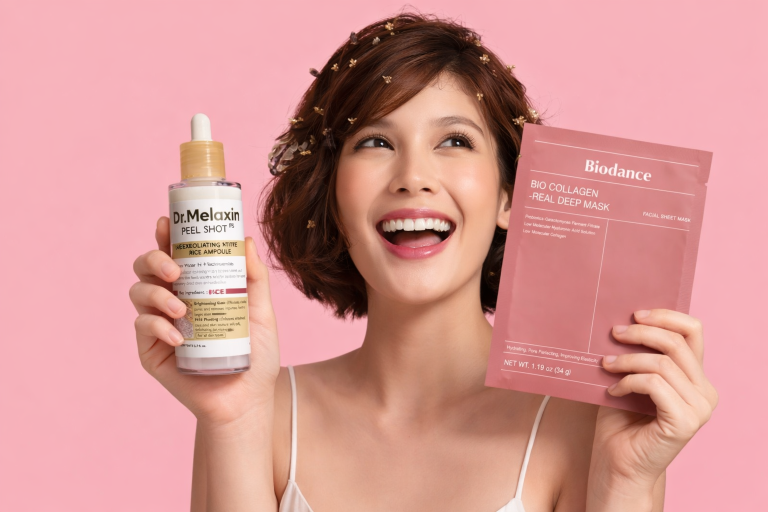
The Dr Melaxin Peel Shot uses Gluconolactone — one of the most studied and well-tolerated PHAs available. Clinical research on Gluconolactone has demonstrated:
- Comparable exfoliation efficacy to glycolic acid at equivalent concentrations
- Significantly lower irritation scores in side-by-side testing
- Compatibility with compromised skin barrier conditions including rosacea and post-procedure skin
- Antioxidant properties that AHAs do not provide
Who should be using a PHA instead of AHA?
The honest answer is: most people. AHA advocates often present the tingling sensation as evidence that the product is “working.” It is not. It is evidence that your skin is experiencing mild acid burn. Gluconolactone achieves the same cell turnover without the inflammatory response.
PHAs are particularly relevant if you:
- Have sensitive or reactive skin
- Have tried glycolic or lactic acid and experienced irritation
- Are using retinol and want to exfoliate without stacking aggressive actives
- Are post-procedure (laser, chemical peel) and want to resume exfoliation carefully
- Live in a dry climate where your barrier is already under stress
The trade-off: pace, not efficacy
PHAs take slightly longer to deliver visible results than high-concentration AHAs. If you use a 10% glycolic acid product, you will likely see faster initial brightening. But if you use a Gluconolactone formula consistently for four to six weeks, you will arrive at the same place — with a skin barrier that is intact rather than compromised.
For sustainable, long-term exfoliation, PHAs win. For a dramatic immediate result you need for Saturday, AHA still has a role. Understanding which you need is the point.
How the Peel Shot combines PHA with BHA
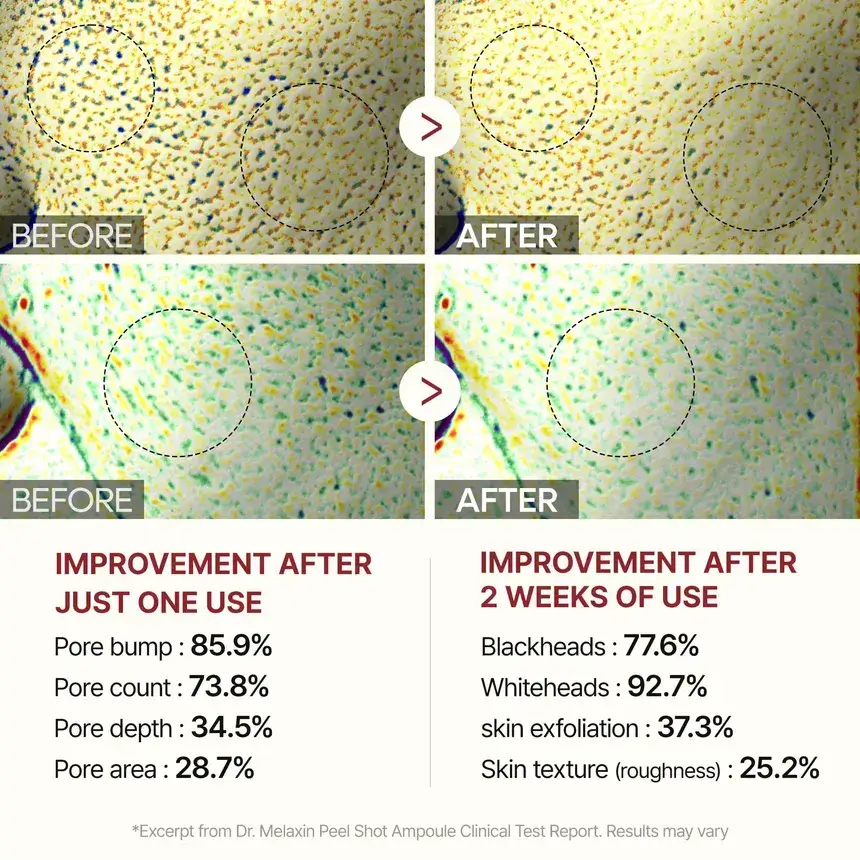
The Dr Melaxin formula pairs Gluconolactone with a low concentration of Salicylic Acid. This combination is deliberate. Gluconolactone works on the skin surface, encouraging cell turnover and brightening. Salicylic Acid, being oil-soluble, penetrates into the pore lining to address congestion and prevent breakouts. Together, they cover both surface texture and pore clarity — without needing a high concentration of either acid to be effective.