Korean skincare routines are famous for their layering — toners, essences, serums, ampoules, moisturisers, SPF. The philosophy behind the steps is sound. The execution, however, was developed for Korean climate conditions, Korean humidity levels, and Korean skin concerns. Adapting it for Australia requires some deliberate adjustment.
Why the climate matters more than you think
Korean skincare was developed in a climate with high humidity, particularly in Seoul and the surrounding regions. High-humidity environments mean the skin barrier faces less transepidermal water loss (TEWL) — the skin loses moisture to the air more slowly. Products are formulated accordingly: lighter textures, less emphasis on occlusion, more focus on layering water-based actives.
Australia is the opposite. Low humidity environments — particularly in Melbourne and Sydney winters, and year-round in most of inland Australia — accelerate TEWL significantly. Skin that functions perfectly in Seoul with a three-step routine needs more barrier support in Brisbane in winter.
The Australian adaptation: fewer steps, better sealing
The K-beauty routine does not need to be abandoned — it needs to be adjusted at the end. The principle of layering actives from thinnest to thickest is sound and applies universally. What changes is the final step: in a low-humidity environment, a lightweight Korean moisturiser alone is rarely sufficient. You need something with occlusive properties to seal everything you have applied.
A practical Australian K-beauty routine looks like this:
Morning
- Gentle cleanser — foam or gel for oily skin, cream or milk for dry
- Toner or essence — hydrating, not exfoliating (save exfoliation for night)
- Vitamin C serum — optional but valuable for brightening and antioxidant protection
- Moisturiser with SPF or separate SPF — this is the most important step and non-negotiable in Australia. SPF50+ daily, year-round.
Evening
- Double cleanse — oil-based first if you have worn SPF or makeup, then gentle cleanser
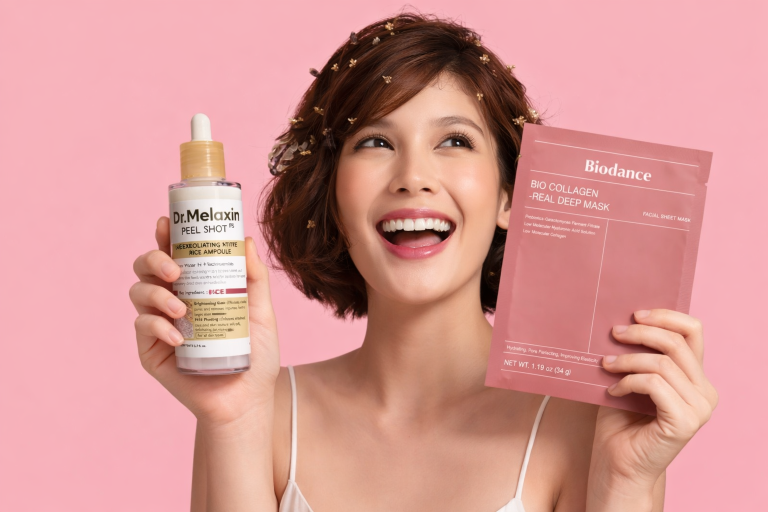
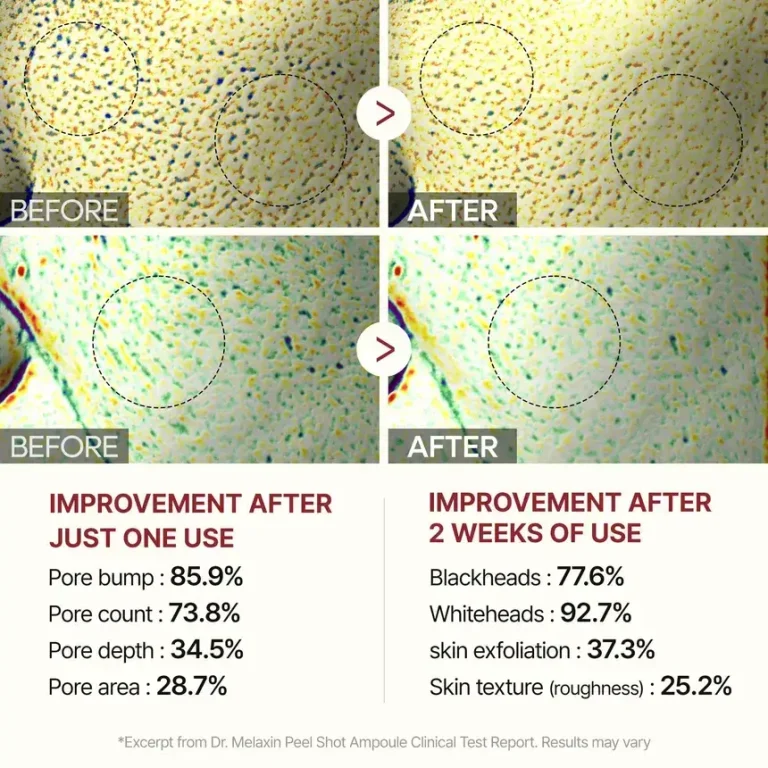
- Exfoliating ampoule 2-3x per week — this is where the Peel Shot fits. Apply to clean skin, wait 2-3 minutes before the next step
- Hydrating toner or essence
- Targeted serum — Niacinamide for brightening, peptides for fine lines, depending on your concern
- Moisturiser — richer than your morning formula
- Facial oil or occlusive — this is the Australian addition. One or two drops of a lightweight facial oil, or a thin layer of something occlusive like Vaseline on very dry areas, seals everything and prevents moisture loss overnight
The sunscreen reality
Korean sunscreens are legitimately excellent — lighter textures, better cosmetic elegance, often better UVA protection than equivalent SPF Australian options. However, they are formulated to meet Korean UV standards, not the Australian standard. If you are spending significant time outdoors in Australia, use a sunscreen that meets the Australian/New Zealand standard AS/NZS 2604. For daily office-to-commute protection, a quality Korean SPF50+ is fine.
How to introduce the Peel Shot into an existing routine
If you are new to exfoliating ampoules, introduce the Peel Shot gradually:
- Week 1-2: Once per week, in the evening, on clean skin
- Week 3-4: Twice per week if no irritation
- Ongoing: 2-3 times per week as tolerated
Do not use the Peel Shot on the same night as a retinol product until you understand how your skin responds to each independently. Do not use it in the morning — the PHAs increase photosensitivity temporarily, and your SPF habit should already be strong before adding this step.